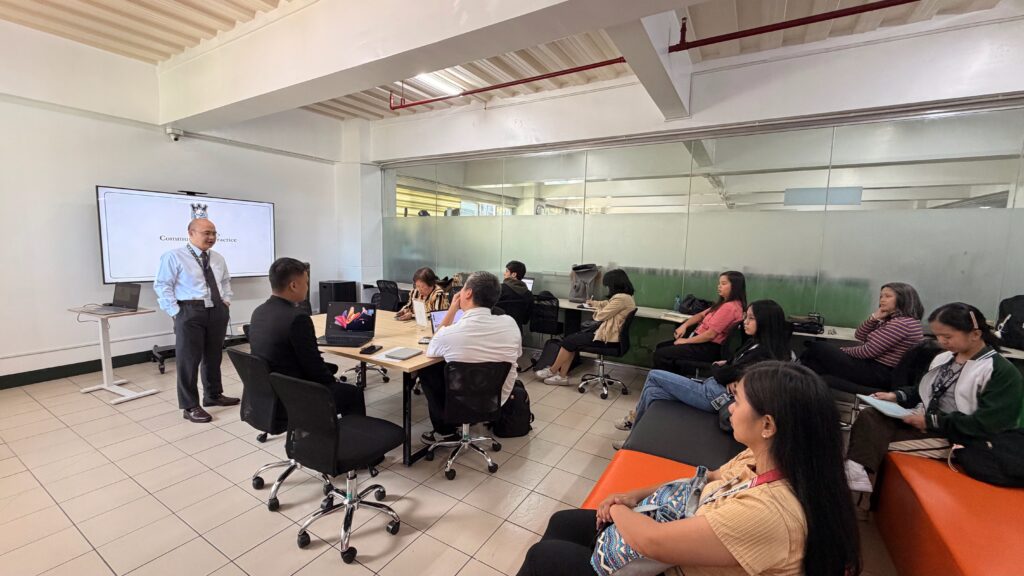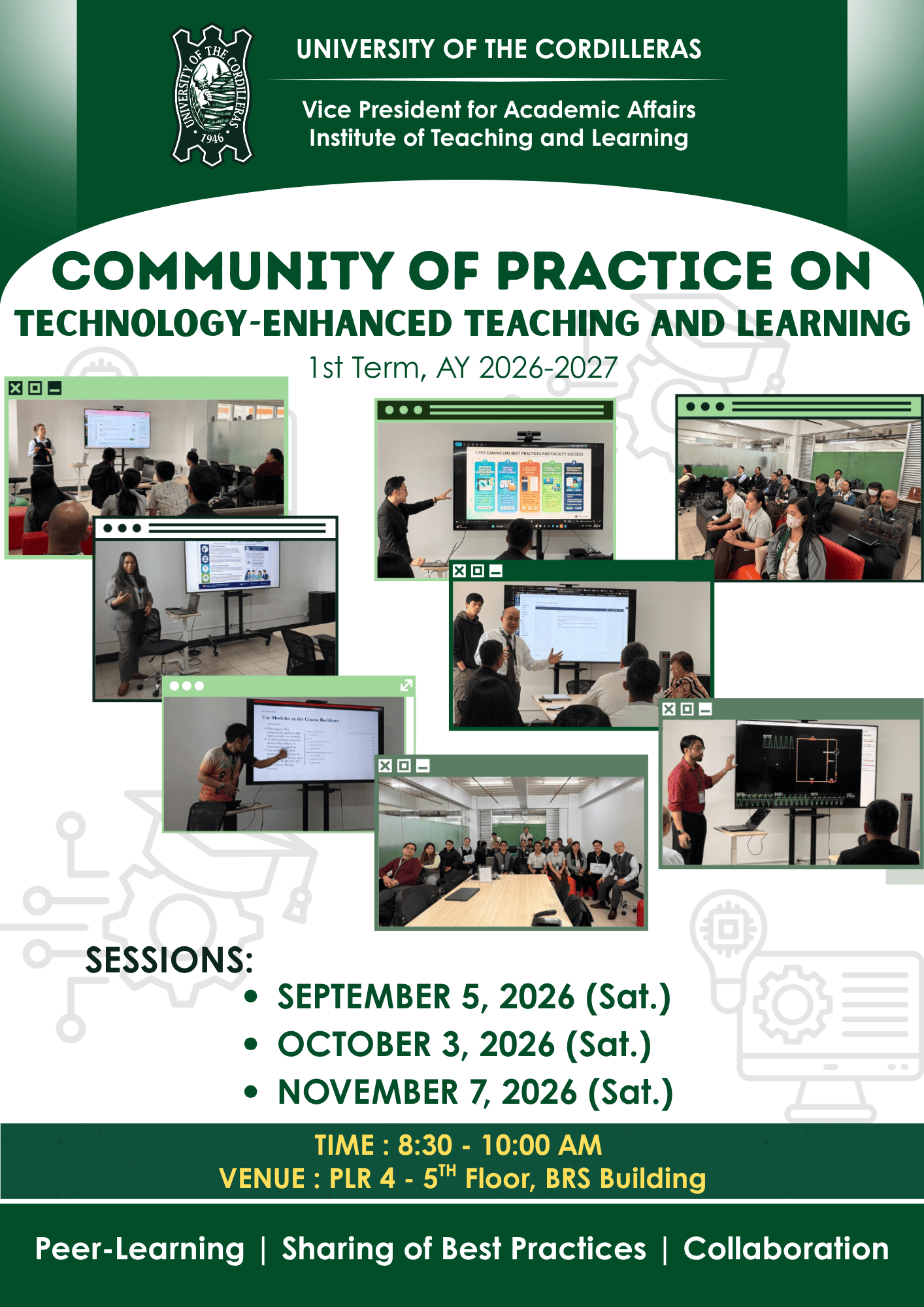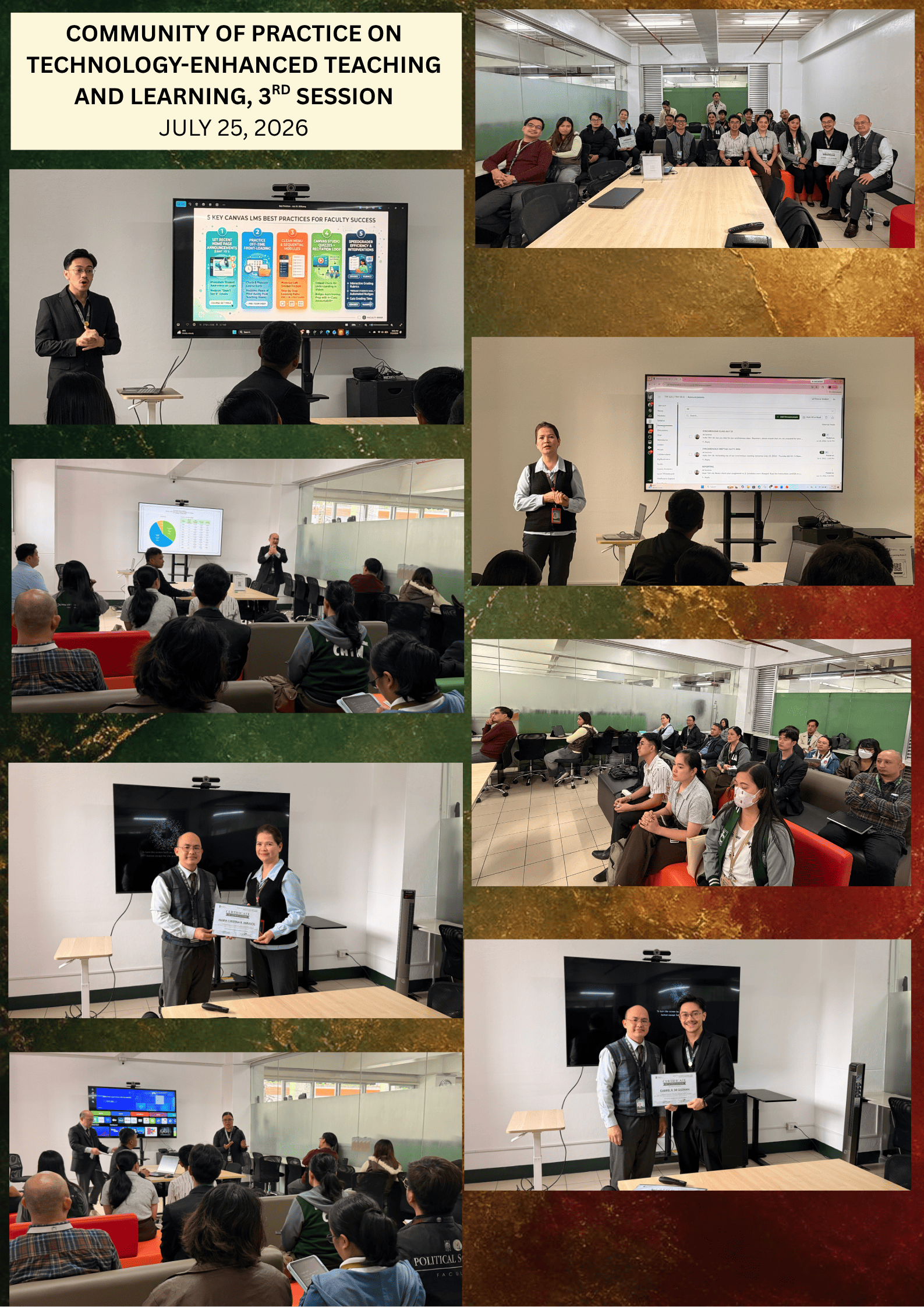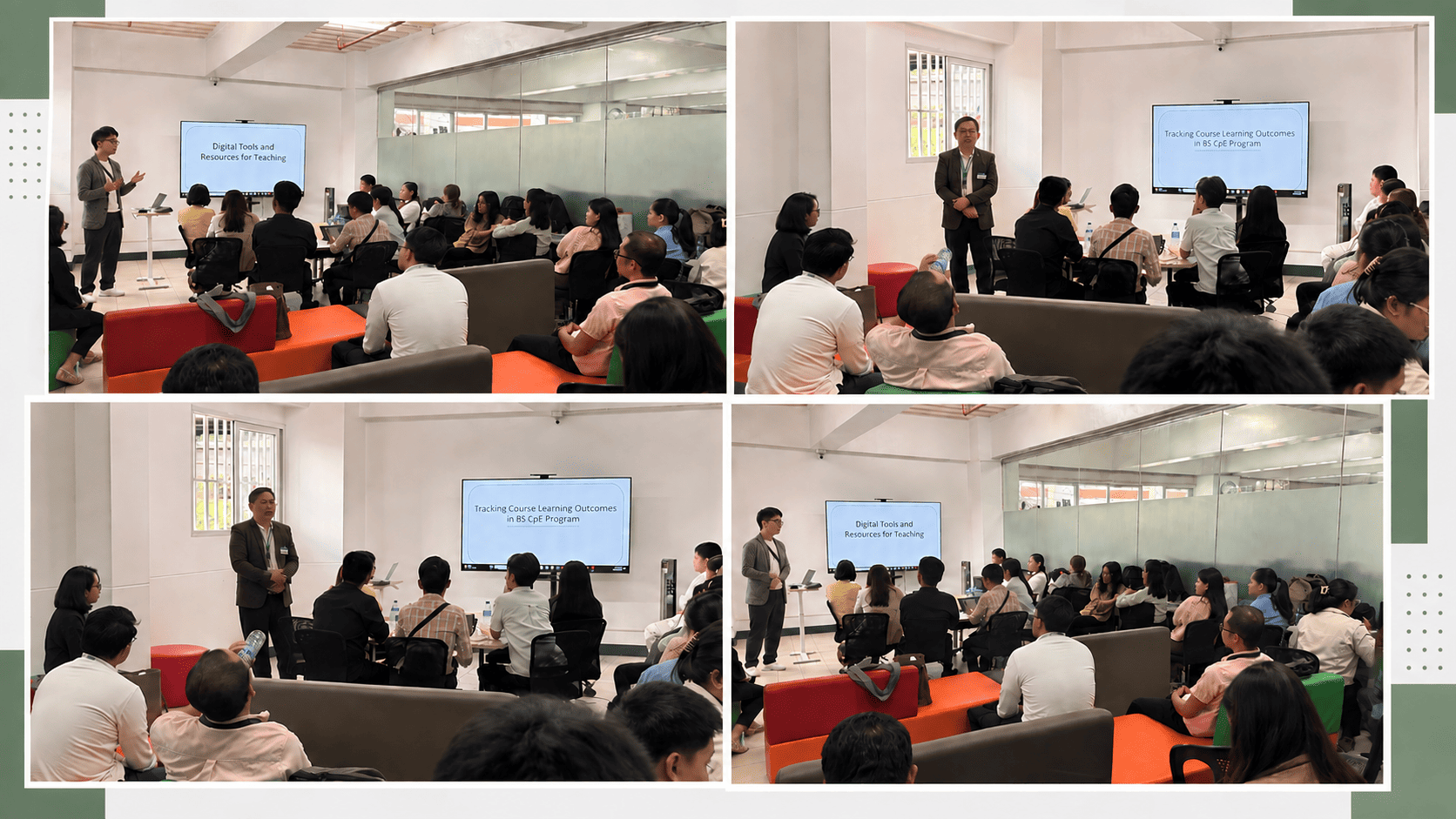
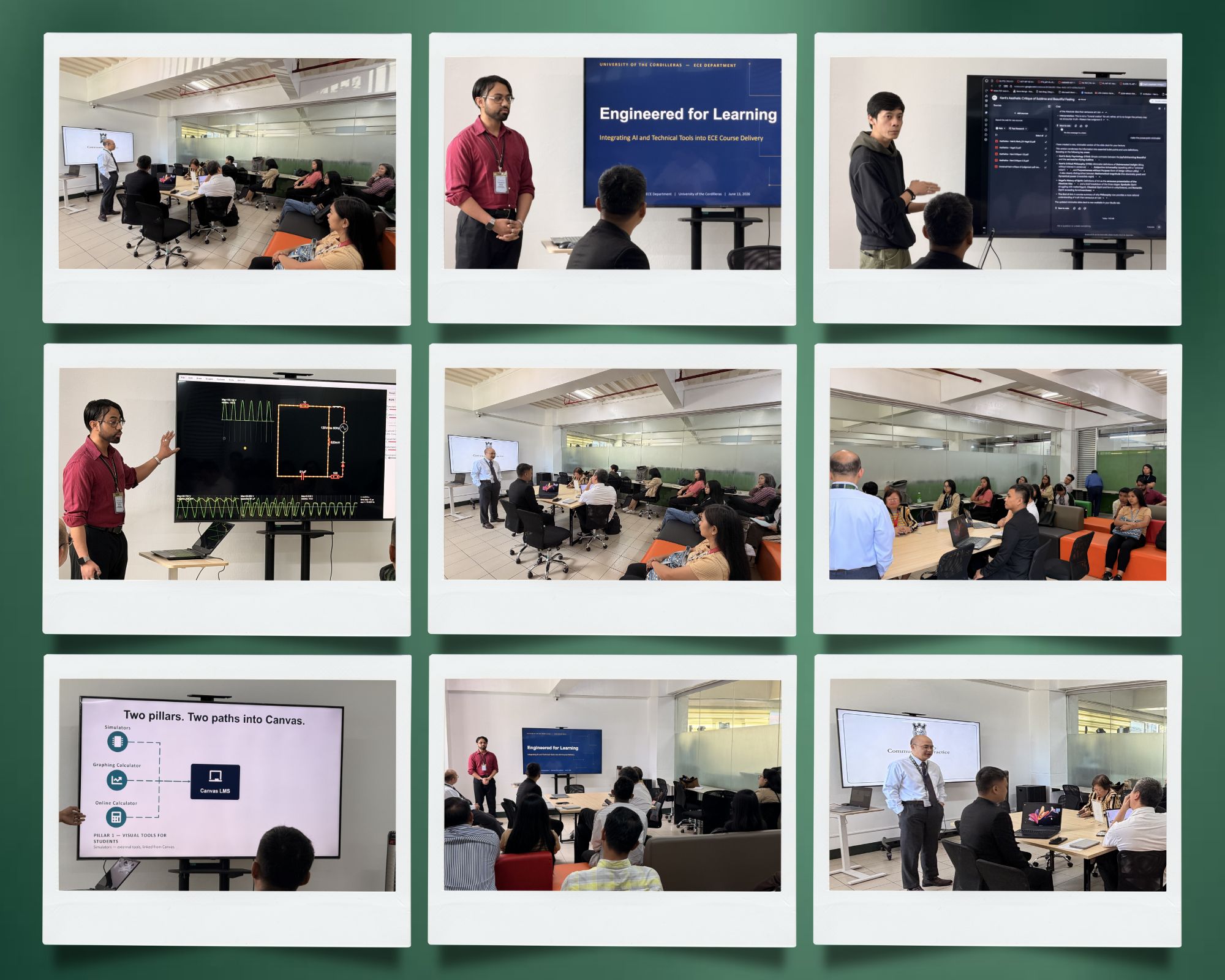
The second session of the Community of Practice on Technology-Enhanced Teaching and Learning was conducted on June 13, 2026, at Peer Learning Room (PLR) 4, 5th Floor, BRS Building. Organized by Arch. Danielle Miko Arcebal from the College of Architecture and Fine Arts (CAFA), College of Engineering (COE), and College of Teacher Education (CTE) cluster, the session brought together faculty members to exchange innovative practices and insights on the effective integration of technology in higher education instruction.
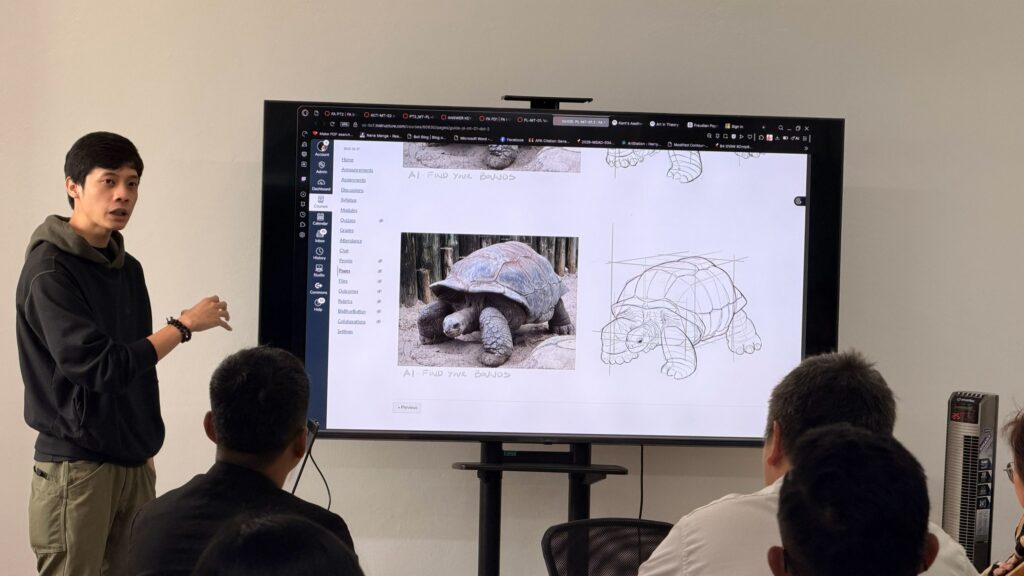
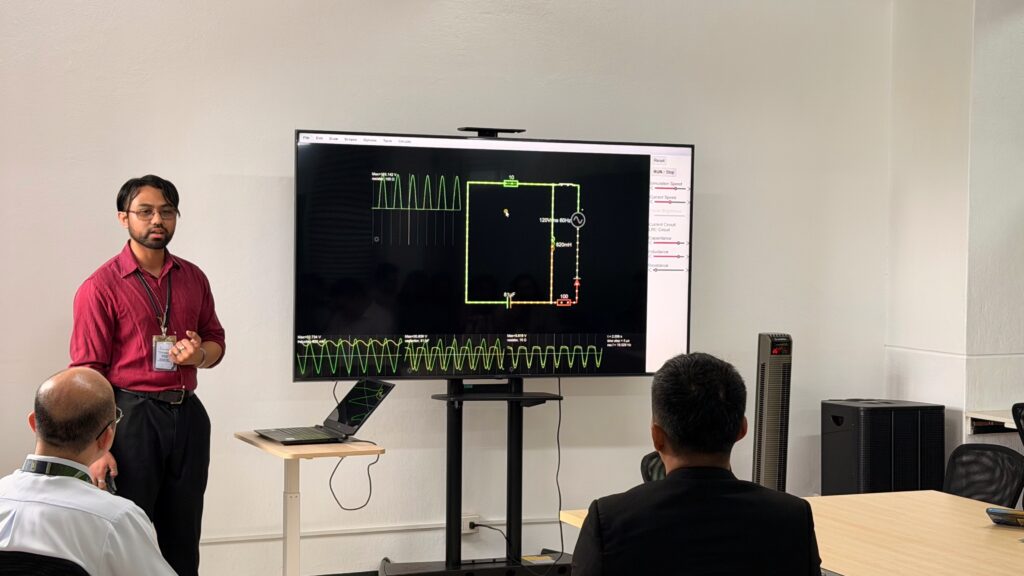
The activity featured presentations from Mr. Jose Angelo Domingo of the CAFA and Engr. James Ewald B. Tuanquin of the COE. Both presenters showcased practical approaches to leveraging digital tools and emerging technologies to enhance teaching, learning, and student engagement.
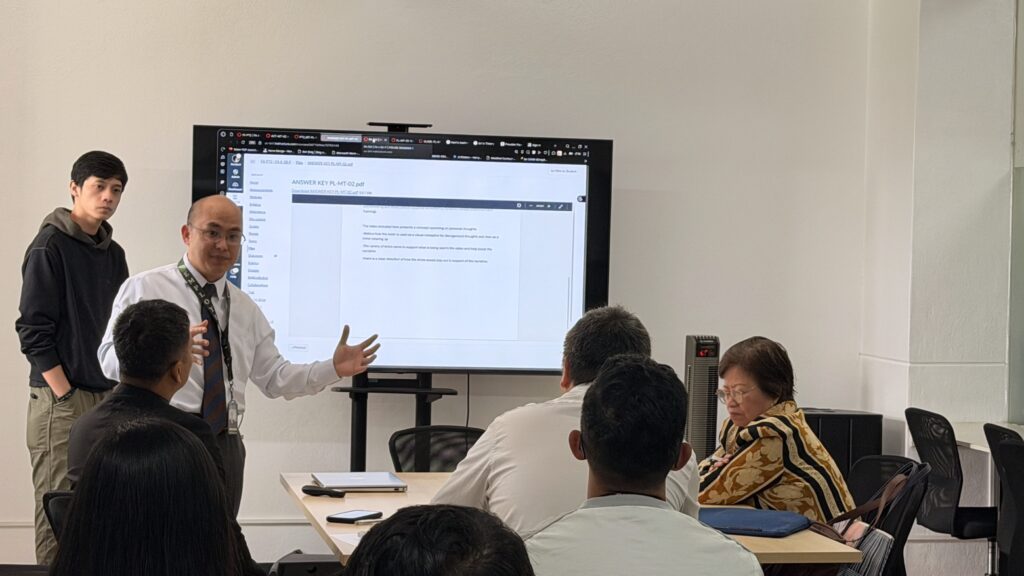
Mr. Domingo shared his current Canvas LMS course card setup, highlighting how he incorporates answer keys and feedback mechanisms into course activities. He emphasized the value of providing answer keys even for activities that do not have definite objective answers, particularly in Fine Arts courses where outputs are often subjective and open to interpretation. According to him, these references can help students better understand expectations, evaluate their own work, and reflect on their learning progress. He also discussed how he utilizes Artificial Intelligence (AI) tools to assist in the development of lecture presentations, while ensuring that all content remains guided and validated by his professional expertise and instructional objectives.
Meanwhile, Engr. Tuanquin delivered a presentation titled “Engineered for Learning: Integrating AI and Technical Tools into ECE Course Delivery.” He discussed two common challenges encountered in engineering education: helping students visualize concepts that are not directly observable, such as electricity, and addressing the limited time available for instructors to create learning materials. To address these concerns, he introduced a framework consisting of visual learning tools that can be integrated into Canvas LMS to help students better understand complex engineering concepts. He also demonstrated how AI-powered tools can assist instructors in generating educational resources and learning artifacts that can be uploaded to Canvas, thereby improving efficiency while maintaining instructional quality.
A pre-presentation was led by a discussion by Dr. Ariel Nimo B. Pumecha, Vice President for Academic Affairs, who reiterated the importance of continuously utilizing the Learning Management System even during face-to-face classes. He emphasized that Canvas LMS serves as a valuable platform for organizing learning resources, facilitating student engagement, and supporting academic continuity regardless of the mode of instruction. Dr. Pumecha also revisited the objectives of the Community of Practice initiative, encouraging faculty members to continue sharing best practices and collaborating to improve technology-enhanced teaching and learning across the University.
This initiative aligns with United Nations Sustainable Development Goal (SDG) 4: Quality Education by enhancing faculty competencies and promoting innovative, technology-supported teaching and learning practices. It also supports SDG 9: Industry, Innovation and Infrastructure through the adoption of digital technologies and artificial intelligence tools that strengthen educational innovation and improve learning experiences in higher education.